
The Glass Marches · A city at work
The news travels faster than the caravan
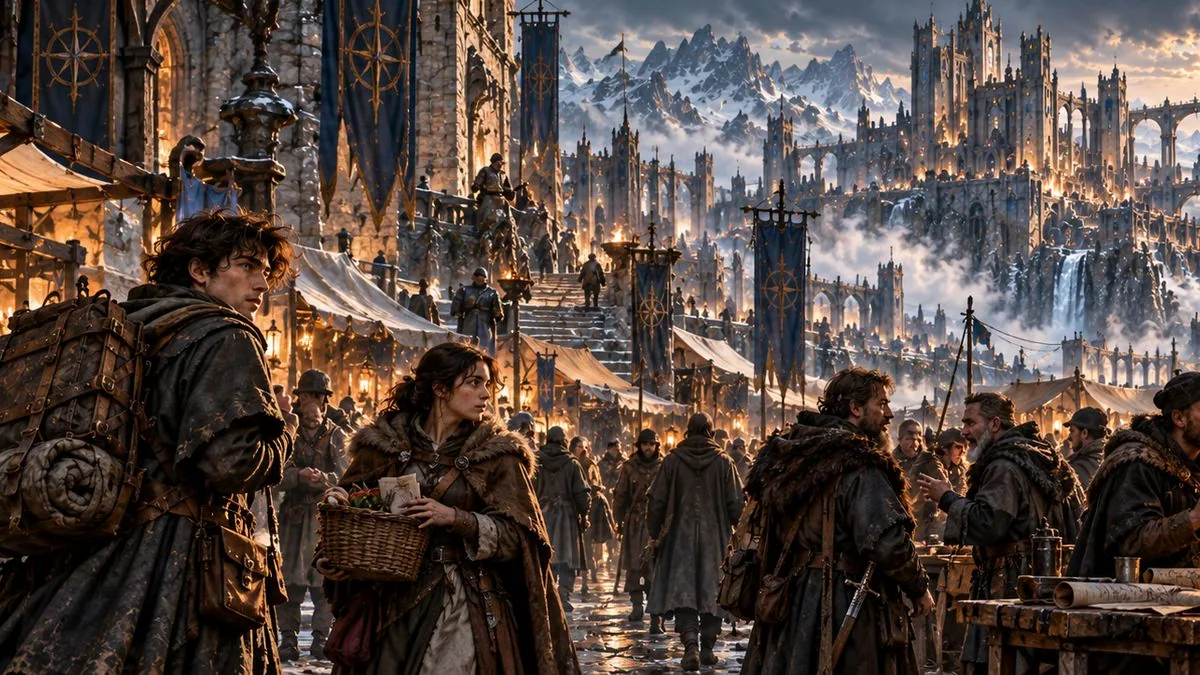
Haut-Fer's bells ring six times before the sun clears the mountains. Down in the lower city, nobody looks up. The bakers are busy, the warehouse crews are starting work, and the streets are filling with carts.
At the market, a printer hangs up a sheet that is still wet with ink. It announces a new tax on four-spoked wheels. Two carters read it and swear. A third can't read, but joins in anyway.
Calen stops long enough to read the smaller print. He works at Warehouse Seven, moving goods that belong to other people. Notices like this are another way of seeing beyond Haut-Fer: a price in another town, a rule brought in by the Crown, the name of a place he has never visited.
When a caravan returns from the Western Marches with half its wagons missing, the news travels through the city quickly. The survivors give conflicting accounts. Part of the cargo is placed under guard. There are questions nobody can answer, which doesn't stop everyone from offering an explanation.
Later, while the royal expedition is away, the printers on Clerks' Street work with their windows open despite the cold. Boys carry freshly printed sheets through the market. Some shout reports of deaths that have not been confirmed. Families waiting for news have to decide what to believe.
The novel's interlude puts it simply: “When facts were missing, headlines took their place.”
The expedition has its own troubles, but the people at home have not been standing still. Goods still need to be moved. Debts are due. Food has to be bought. The city continues to work while the stories about the travellers become more elaborate.
That's another side of the journey in The Burden-Bearer. Leaving a city doesn't mean leaving it outside the story. Those who stay behind have to live with the waiting, and with everything the newspapers get wrong.